
How Storage and Pressure Impact Holographic Foil Results?

Holographic foil is widely used in security packaging, labels, and premium branding because it creates strong visual diffraction and anti-counterfeiting effects.
However, many converters face the same production problems:
- Holographic patterns look blurry
- Diffraction effects become weak
- Foil transfer is incomplete
- Security features lose clarity
In most cases, these issues come from two critical factors: holographic foil storage conditions and transfer pressure control.
Managing these parameters correctly helps maintain sharp optical patterns and stable foil transfer quality.
The Basics of Holographic Foil
Holographic foil contains a micro-embossed optical layer that creates the rainbow diffraction effect.
Typical structure:
- PET carrier film
- release layer
- aluminum reflective layer
- holographic micro-embossed layer
- adhesive layer
During foil stamping or cold foil transfer, pressure and adhesive contact transfer the holographic layer to the substrate.
Because the optical structures are micron-level patterns, they are sensitive to environmental conditions and mechanical pressure.
The Role of Storage Conditions in Holographic Foil
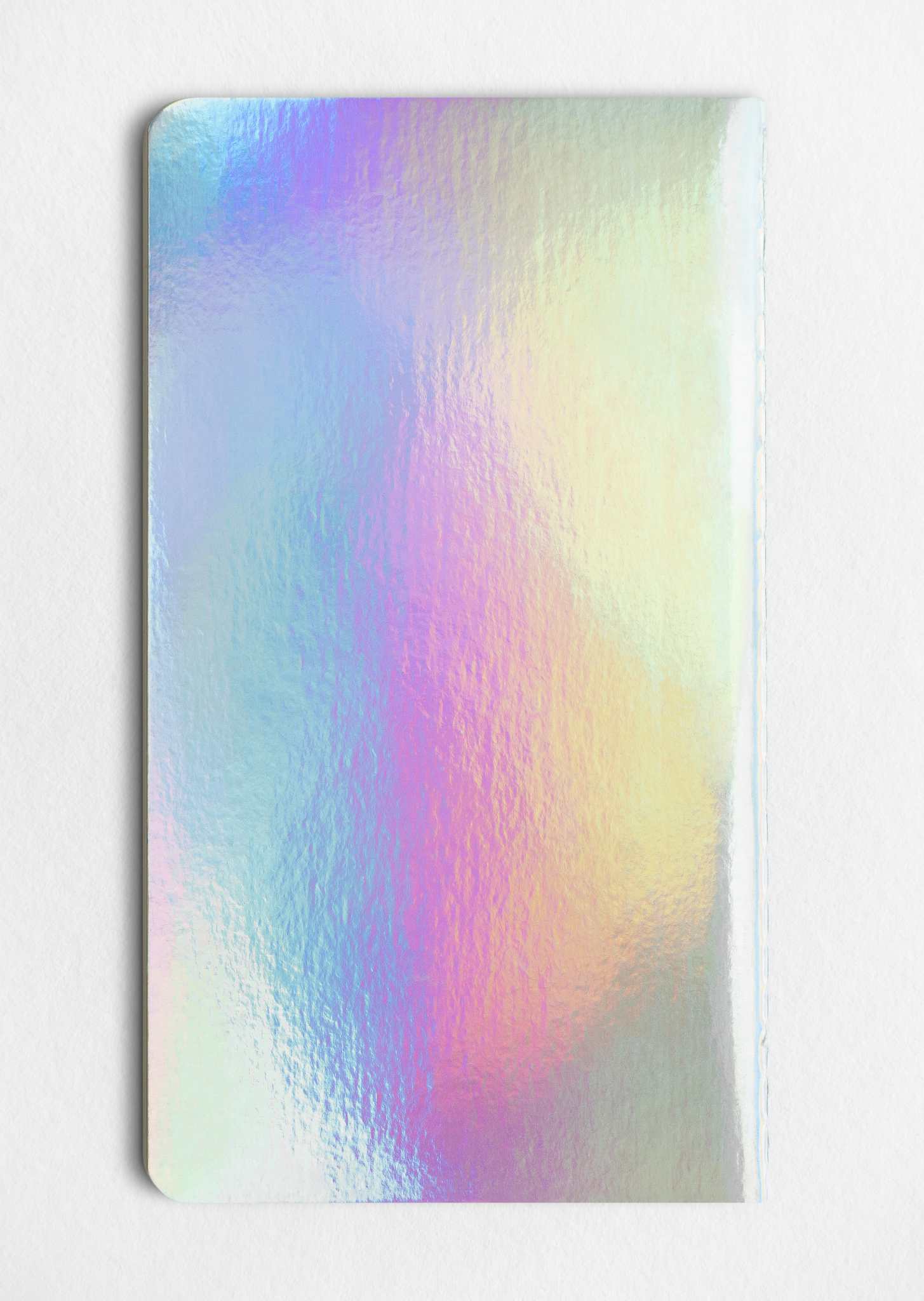
Proper storage is essential to maintain optical layer stability and diffraction clarity.
If holographic foil is stored incorrectly, the micro-embossed structures may deform or become contaminated, leading to blurred holographic effects.
Recommended Storage Parameters:
- Temperature
18–24°C
- Relative humidity
45–60% RH
- Acclimatization before production
≥ 24 hours
Handling recommendations:
- use anti-static packaging
- avoid edge pressure on foil rolls
- prevent bending or surface scratches
These steps help preserve the precision of holographic patterns.
Effects of Improper Storage
- Poor storage conditions often lead to visible quality defects.
- Low humidity may increase static electricity, attracting dust to the optical surface.
- High humidity may cause foil sticking or contamination.
Typical production issues include:
- holographic diffraction blur
- micro-pattern distortion
- uneven reflective effects
Once the optical layer is damaged, the security hologram effect cannot be restored.
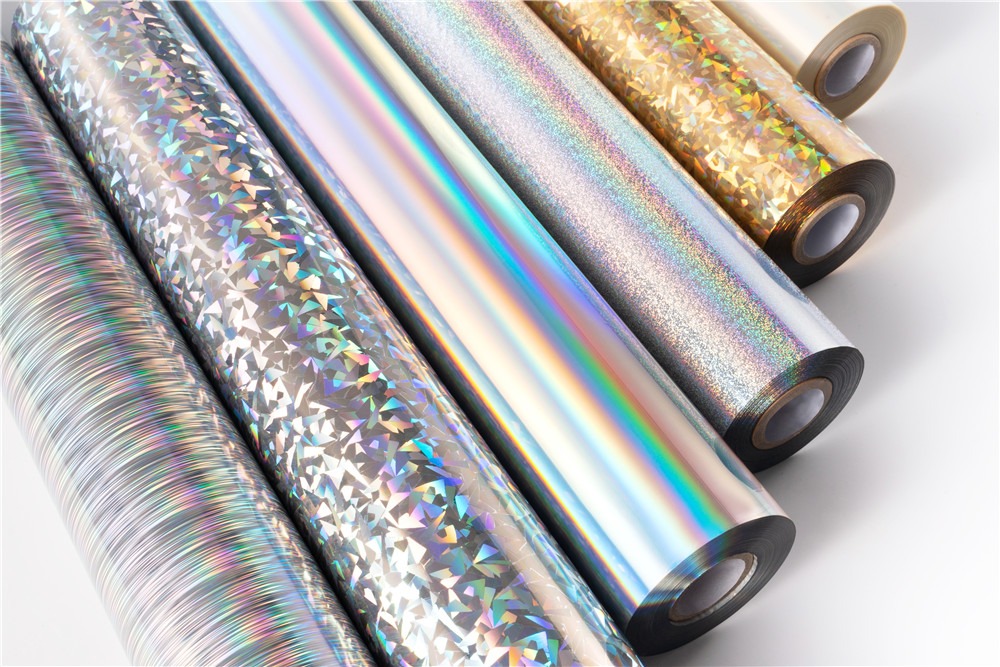
Dragon Holographic Foil
The Role of Pressure in Holographic Foil Transfer
Pressure is another key parameter in holographic foil stamping and cold foil processes.
It ensures proper contact between:
- foil
- adhesive layer
- substrate surface
Stable pressure helps transfer the holographic layer while preserving the micro-embossed structure.
Recommended Pressure Settings
Typical pressure parameters for holographic foil transfer:
- Transfer pressure
0.25–0.45 MPa
- Production speed
60–100 m/min
- Roller hardness
70–80 Shore A
Many converters also use air-cushion pressure rollers to improve pressure uniformity.
Consistent pressure helps maintain sharp holographic diffraction patterns.
Effects of Incorrect Pressure
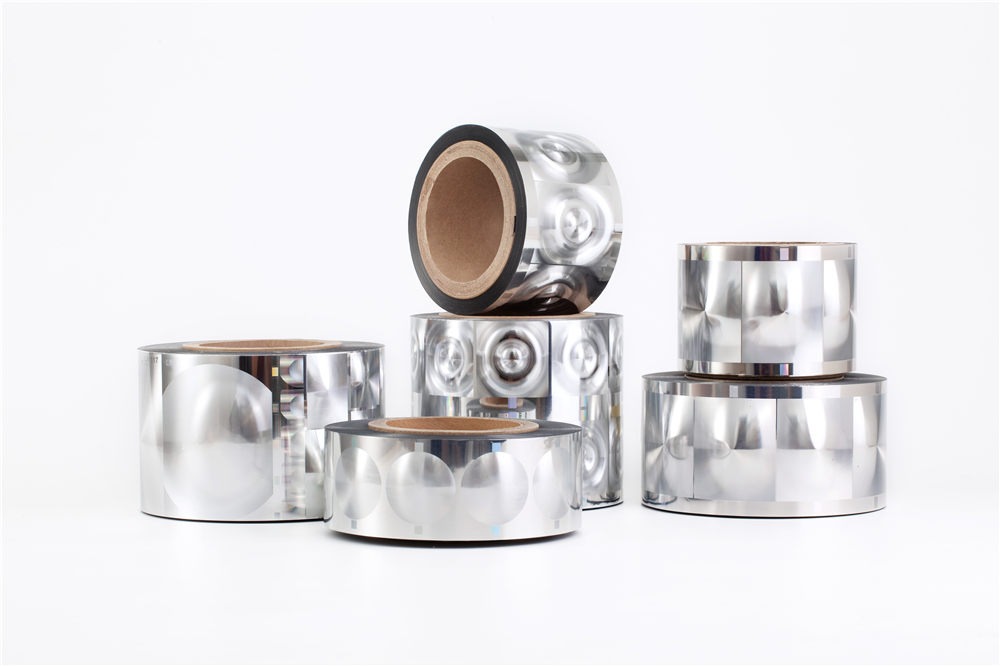
Dragon Holographic Foil
Incorrect pressure can easily damage the holographic effect.
Low pressure may cause:
- incomplete foil transfer
- patchy holographic areas
- weak adhesion
High pressure may cause:
- collapse of holographic micro-structures
- loss of diffraction effect
- pattern distortion
Maintaining balanced pressure is critical for security hologram clarity.
Finding the Right Balance: Storage and Pressure
High-quality holographic foil results depend on both proper storage and stable transfer pressure.
Key production factors include:
- Foil condition
Improper storage may weaken optical performance before printing.
- Substrate surface
Smooth materials such as coated paper or PET film improve transfer quality.
- Adhesive compatibility
Recommended adhesive viscosity: 18–35 s (DIN 4 cup).
- Static control
Surface charge should remain ≤ 500 V.
Controlling these variables helps ensure consistent holographic foil performance.
Practical Tips for Optimizing Holographic Foil Results
To maintain strong holographic effects in production:
- Store foil at 18–24°C and 45–60% RH.
- Allow at least 24 hours of acclimatization before printing.
- Maintain transfer pressure between 0.25–0.45 MPa.
- Use 70–80 Shore A rollers or air-cushion rollers for stable pressure.
- Keep the production environment dust-free and static-controlled.
These practices help protect holographic optical layers and security patterns.
FAQs
Q1: How does holographic foil work?
A: Holographic foil works through a micro-embossed optical layer that diffracts light to create rainbow or 3D visual effects. During the holographic foil stamping or cold foil transfer process, pressure and adhesive transfer the foil layer onto the substrate, preserving the holographic pattern.
Q2: What is better, foil or holographic?
A: Standard foil provides metallic decoration, while holographic foil offers stronger visual impact and anti-counterfeiting features. For security labels, premium packaging, and brand protection, holographic foil is usually the better choice.
Q3: What are the disadvantages of hot foiling?
A: Hot foiling requires high temperature, metal dies, and slower production speeds. Incorrect temperature or pressure can cause foil distortion, incomplete transfer, or substrate damage, which may reduce production efficiency.
Q4: Is there a difference between holographic and foil?
A: Yes. Traditional foil mainly provides metallic or matte finishes, while holographic foil contains micro-structured optical patterns that create diffraction effects. This makes holographic foil more suitable for security packaging and high-end printing applications.
Q5: How to apply holographic foil?
A: Holographic foil can be applied through hot stamping or cold foil transfer. The process requires controlled transfer pressure (0.25–0.45 MPa), proper adhesive contact, and stable production conditions to maintain clear holographic patterns.
Conclusion
Holographic foil performance is highly dependent on storage conditions and pressure control. Incorrect storage can damage the micro-embossed optical layer, while improper pressure may distort holographic patterns during transfer. By maintaining proper temperature, humidity, and pressure parameters, converters can achieve clear diffraction effects, strong security features, and consistent foil transfer quality.