
How To Control Foil Stamping Quality for Registration & Rub Resistance
A foil-stamped package can pass a quick visual check and still fail during folding, packing, or transport. The foil may be slightly out of register, a fine line may be incomplete, or the surface may lose its gloss after rubbing. These problems are expensive when they are found after a full run. A useful foil stamping quality control plan starts before mass production. It defines what must be checked, how the sample will be tested, and which production records will be kept for the next order.
The goal is not to create a complicated laboratory procedure for every job. It is to make the important checks repeatable. A packaging printer and foil supplier should agree on an approved sample, the critical dimensions, the test method, and the acceptable result before the press is released for the full run.
How Does Foil Stamping Quality Control Work Before Mass Production
The process normally begins with a trial on the finished substrate. The trial should include the actual paper or film, printing inks, coating, die, and post-processing sequence where possible. Inspect the sample under consistent lighting and compare it with the artwork. Then check registration, transfer completeness, edge definition, adhesion, and surface resistance. If the package will be folded, embossed, laminated, or filled, test those steps before approving the sample. The approved piece becomes the reference for production staff and for future repeat orders.
What Should a Foil Stamping Quality Control Checklist Include
|
Check |
What to inspect |
Typical failure sign |
|
Registration |
Foil against print, die line, fold, or embossing. |
Uneven border, shifted logo, or exposed edge. |
|
Transfer |
Fine type, lines, counters, and solid areas. |
Pinholes, missing details, or incomplete coverage. |
|
Rub resistance |
Surface after controlled handling or rubbing. |
Flaking, scratching, or loss of gloss. |
|
Repeatability |
First-off sample against later production sheets. |
Color, gloss, or position changes between batches. |
How Do You Check Foil Stamping Registration Tolerance
Registration should be checked against the feature that matters to the finished product. On a carton, that may be the print image, window, fold, or die-cut edge. On a book cover, it may be the spine, title, or a border that must remain visually centered. Use a measurement reference on the approved artwork and inspect several samples across the sheet or web, not only the first piece. The acceptable tolerance depends on the design and substrate. A narrow border usually reveals movement more clearly than a single isolated logo, so critical elements should be included in the test form.
How Do You Run a Foil Stamping Rub Test
A rub test should use a consistent stroke, pressure, number of cycles, and observation method. Compare the tested area with an untested area under the same light. Look for loose flakes, scratches, dull patches, lifted edges, or transfer to the rubbing material. If the finished package will be exposed to moisture, refrigeration, stacking, or repeated opening, include that condition in the approval plan. A pass on a dry sample does not automatically predict performance after varnish, lamination, or handling has been added.
How Should Fine Type, Solid Areas, and Embossed Details Be Inspected?
Fine type needs clear counters and continuous strokes. Large solid areas need even coverage without pinholes, clouding, or visible changes in gloss. Embossed details should be inspected at the edge of the relief because pressure and surface variation can change the transfer. Include reversed type, gradients, and the smallest important element in the test artwork. These features reveal process limits earlier than a large simple rectangle.
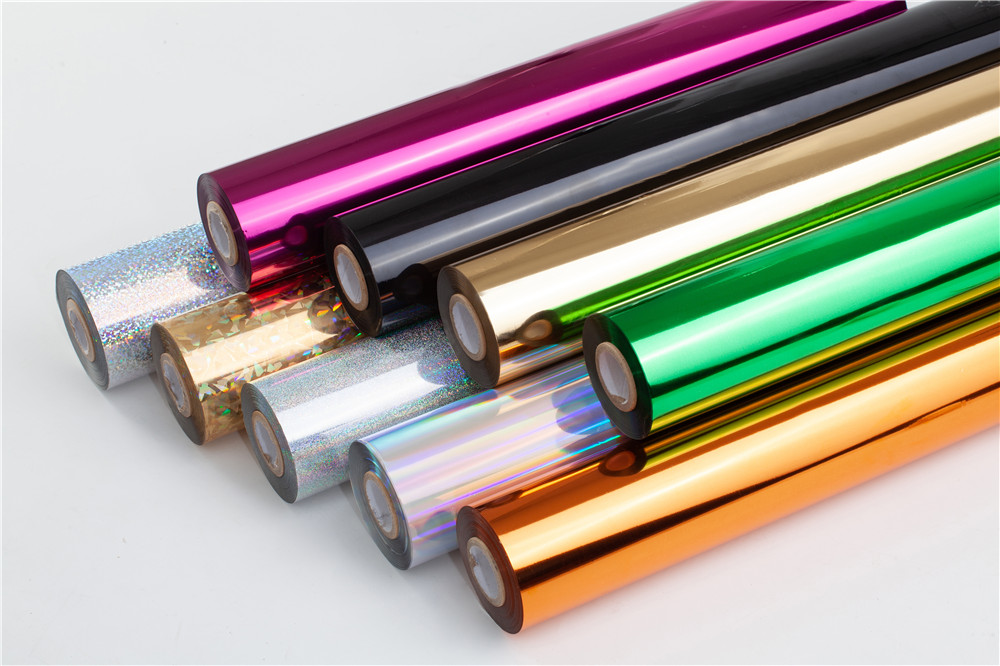
Hot stamping foil rolls used for production sampling
Which Production Records Help Prevent Foil Stamping Variation
Record the foil series, color, roll dimensions, substrate, coating, die version, press type, temperature, pressure, speed, and contact time used for the approved sample. Note the date, material batch, operator, and any changes made during the run. The purpose is not to freeze every press setting forever. It is to give the next operator a reliable starting point. If a high-speed stamping foil is used, note the running speed and how the foil performed during acceleration, steady running, and changeover.
How Should Printers Approve a Foil Stamping Sample Before Mass Production
Use a short sign-off sheet that links the sample to the artwork and production order. Confirm the visual appearance, registration, rub result, folding or embossing result, and any coating or lamination that follows stamping. Keep a physical golden sample and a digital image for reference, but rely on the physical sample for surface and tactile checks. If the customer has a defined registration tolerance or rub requirement, write it into the approval record instead of leaving it as an informal expectation.
How Can Hot Foil Stamping Supplies Support Better Quality Control
Foil quality control starts with selecting a grade that matches the surface and the artwork. A supplier should be able to discuss release, adhesion, fine-detail transfer, large-area coverage, and resistance to scratching and rubbing. Dragon Foils lists hot stamping foil for paper, plastic labels, OPP laminates, and other graphic applications. The product choice should be confirmed with a sample on the actual stock, especially when the design includes overprinting, rough paper, plastic, or a fast production line.

Hot stamping foil colors and finishes for quality approval samples
How Does Dragon Foils Support Repeat Foil Stamping Production
Dragon Foils offers general-purpose and application-specific hot stamping foil, including the PP Series for common paper and plastic label applications. Its technical information can help a printer prepare the first trial, while the customer's test form confirms the actual result on the finished substrate. When requesting a recommendation, provide the press, material, artwork size, required finish, expected speed, and any registration or rub resistance requirement. That information makes the discussion more useful than a color request alone.
Conclusion
Set the acceptance criteria before production, test the features that matter, and keep the approved sample and process record for future orders. To review hot foil stamping supplies and discuss a foil stamping quality control trial, visit the Dragon Foils website and send the substrate, press, artwork, and required tests.