
How Do You Choose Hot Stamping Foil Rolls for Your Press and Packaging Job
A foil roll can look right in a catalog and still be wrong for the press. The width may not match the image layout, the core may not fit the shaft, or the grade may transfer well on coated paper but fail on a plastic label. These small mismatches create waste and delay a packaging order. For a buyer, the practical answer is to specify the press, substrate, artwork, speed, and roll dimensions together. A supplier can then recommend a hot stamping foil roll that is usable in production rather than simply attractive in a color chart.
This is especially important when a packaging job will repeat next quarter. A record of the approved foil, machine, roll size, and settings makes reordering easier and reduces variation between batches. It also gives the printer a clearer basis for comparing hot foil rolls from different suppliers.
How Does a Hot Stamping Foil Roll Fit Into the Production Workflow
The foil roll is mounted on the press, unwound under controlled tension, brought into contact with the substrate, and released after the image has transferred. The usable length depends on the image layout, gaps between repeats, and the amount of foil consumed during set-up. The roll is therefore part of the production plan, not just a consumable selected after the artwork is complete. A narrow roll may reduce unused material, while a wider roll can support several lanes or a larger image. Both choices should be checked against the equipment and the design.
Which Hot Stamping Foil Roll Specifications Should You Confirm Before Ordering
|
Specification |
Why it matters |
Information to provide |
|
Roll width |
Controls image coverage, lane layout, and edge waste. |
Artwork width, repeat layout, and web or sheet format. |
|
Roll length |
Affects changeovers, trial waste, and order quantity. |
Run length, make-ready allowance, and repeat schedule. |
|
Core and winding |
Determines shaft fit, unwind direction, and tension. |
Press model, core size, winding direction, and roll weight. |
|
Foil grade |
Affects transfer, release, gloss, and adhesion. |
Paper or film, coating, ink sequence, and finish required. |
How Do Roll Width and Length Affect Foil Waste
The correct width is usually the smallest practical width that covers the image and leaves enough margin for stable running. If it is too wide, unused foil travels through the press and raises the cost of each job. If it is too narrow, the image may run off the edge or require an inefficient layout. Roll length should be based on sellable output plus make-ready, splice, and changeover allowances. For a repeat order, compare actual consumption with the original estimate and update the next purchase instead of relying on a standard roll length.
Why Do Core Size, Winding Direction, and Roll Tension Matter
A roll can be perfectly manufactured and still be inconvenient if the core does not fit the press shaft. Winding direction also affects how the foil enters the machine and whether the coated side faces the substrate. Uneven edges or loose winding can create telescoping, wrinkles, and unstable tension. Before ordering hot stamping foil rolls, send the equipment model, shaft details, maximum roll diameter, and preferred unwind direction to the supplier. Those details are more useful than the press brand alone.
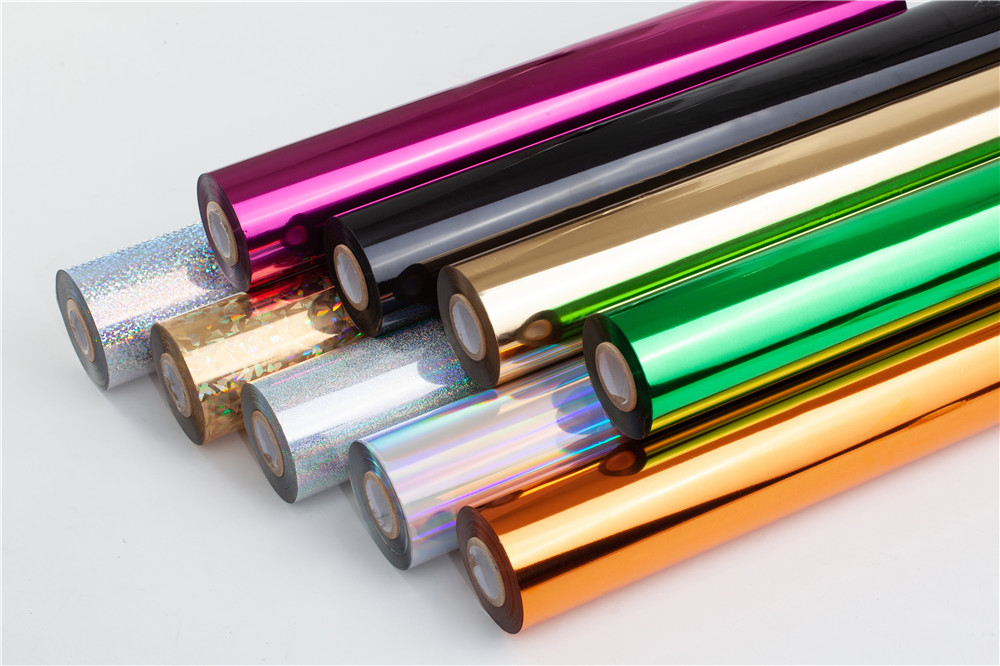
Hot stamping foil rolls in metallic and special-effect shades
How Do You Match Hot Foil Rolls to Paper, Labels, and Plastic Substrates
Start with the surface. Plain, printed, and coated paper may need different release and adhesion behavior. Plastic labels and OPP laminates require a grade that can bond to the treated surface without lifting at the edges. Fine type and narrow lines also need a clean transfer, while a large metallic panel needs even coverage across a broader area. Dragon Foils describes its PP Series for paper, plastic labels, OPP laminates, and some UV-varnished paper surfaces, with options including gold, silver, matte gold, and matte silver. The final grade should still be confirmed with a trial on the customer's actual stock.
When Should You Choose Metallic, Matte, or Holographic Foil Rolls?
Bright metallic foil is often used for logos, borders, and premium highlights. Matte foil gives a quieter finish that can work with soft-touch or uncoated packaging. Holographic foil adds movement and is more visually active, so it should be placed where it will not reduce the readability of product information. Color and finish should be selected after the substrate and process have been checked. A surface coating can change both the perceived color and the rub performance.
How Can You Estimate Foil Consumption for a Repeat Packaging Order?
Estimate the repeat area, the number of lanes, the planned quantity, and the roll length. Add make-ready and trial allowances, then check the estimate against the actual remaining length after the first production run. Keep an approved sample and note the foil series, color, width, length, core, machine, speed, and artwork version. This simple record helps purchasing avoid both emergency reorders and excessive unused stock. It is also useful when a brand changes carton size or moves a job to another press.
What Should You Ask Hot Foil Suppliers Before a Production Trial?
Ask for the recommended substrate range, machine types, transfer characteristics, available finishes, roll dimensions, packing method, lead time, and sample policy. Confirm whether the foil is intended for fine details, large areas, overprinting, plastic labels, or rough paper. If the project will run at high speed, explain the target speed and ask whether a high-speed stamping foil is available. A supplier should also be able to explain what information is needed when a sample shows weak transfer, incomplete coverage, or poor release.

Hot stamping foil colors and finishes
Which Hot Stamping Foil Rolls Can Dragon Foils Supply
Dragon Foils provides hot stamping foil for general graphic printing and application-specific work. Its PP Series information covers common paper and plastic label uses and lists several metallic and matte colors. The company's product pages also describe machine and application considerations that can be used as a starting point for a trial. For a quotation, send the press type, substrate, image size, requested finish, roll dimensions, production quantity, and delivery market to the Dragon Foils team.
Conclusion
Choose the roll as part of the complete printing job. Confirm width, length, core, winding, substrate, finish, and speed, then approve the result on the actual stock. To review hot foil supplies and hot stamping foil rolls for packaging and labels, visit Dragon Foils and share the production details needed for a practical recommendation.